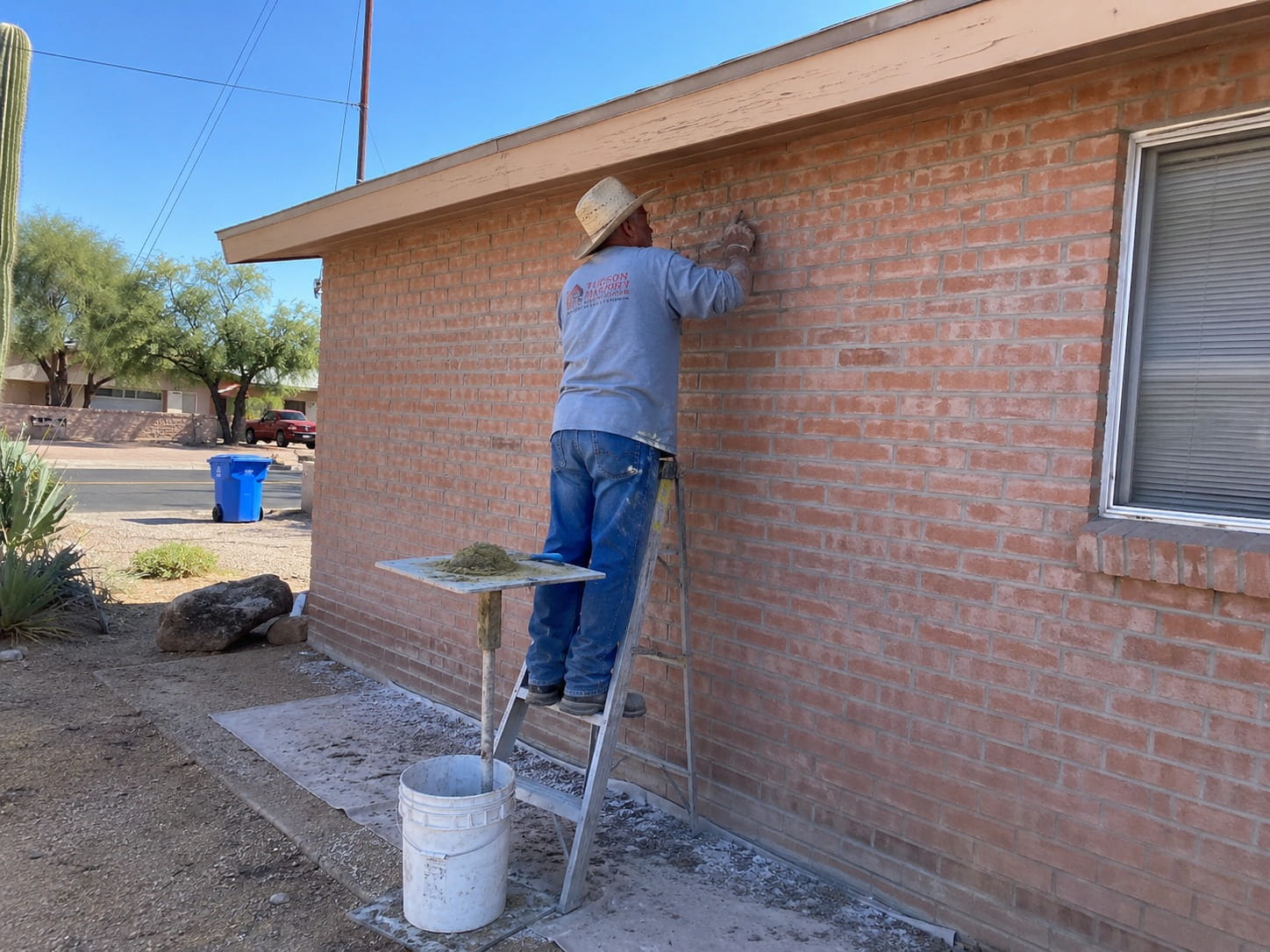
A practical starting point for Tucson homeowners considering a brick masonry project, from material choices to what actually drives cost and timeline.
Brick Masonry Tucson: Everything Homeowners Should Know Before Starting a Project
If you’re weighing a brick project for your Tucson property, you’re dealing with a different set of conditions than a homeowner in Phoenix, Denver, or anywhere back east. Intense UV exposure, wide day-to-night temperature swings, monsoon downpours, and expansive caliche soil all put unique stress on masonry here. Before you sign a contract or even finalize a design, it helps to understand how brick masonry Tucson projects actually work, what typically goes wrong, and what a reasonable process looks like from start to finish.
Why Brick Masonry Behaves Differently in the Desert
Brick itself is a stable, long-lasting material, but the way it’s installed and maintained needs to account for Tucson’s climate. Summer surface temperatures on masonry walls can exceed 150°F, then drop sharply after sunset. That daily expansion and contraction cycle puts steady pressure on mortar joints over the years. Add in the occasional hard monsoon storm dumping an inch of rain in under an hour, and you have a recipe for water intrusion wherever joints have started to crack or recede.
The soil underneath matters just as much as the weather above. Much of the Tucson area sits on caliche, a dense, calcium-rich soil layer that can be nearly as hard as concrete when dry but shifts as moisture content changes. Footings and foundations for brick walls need to be designed with that movement in mind, which is one reason a locally experienced crew matters more here than in regions with more predictable soil behavior.
Common Brick Masonry Projects Tucson Homeowners Take On
Most residential brick work in this area falls into a handful of categories. Homeowners often start with brick pavers for a patio, walkway, or driveway, since pavers hold up well to heat and give a finished look to outdoor living spaces. Others come to us because mortar joints on an existing wall or chimney have started crumbling, which calls for brick repointing rather than a full rebuild. On older or historic-style homes, tuck pointing is a related but more decorative technique that restores both structural integrity and the fine, uniform look of the original joints.
Boundary and privacy walls are another frequent request, and when those walls start leaning, cracking, or losing blocks, that typically falls under block wall repair rather than brick repointing, since the underlying construction and repair methods differ. Knowing which category your project falls into before you call around for quotes will save you time, since not every masonry contractor handles every type of brick and block work equally well.
What Actually Drives the Cost of a Brick Project
Cost is usually the first question homeowners ask, and it’s a reasonable one, but the honest answer is that it depends on several variables: square footage, the condition of existing masonry, site access, material selection, and whether the project is new construction or repair work on something already failing. A small chimney repointing job and a full paver patio installation are both “brick masonry,” but they land in very different price ranges. We’ve put together a detailed brick masonry Tucson cost guide that breaks down pricing by project type if you want real numbers before requesting a quote.
One thing worth knowing upfront: the cheapest quote isn’t always the best value. Mortar mix, brick quality, and installation technique all affect how long the work lasts in Tucson’s climate. A repair done with the wrong mortar hardness, for example, can fail again within a couple of years, which ends up costing more than paying for the right materials the first time.
Materials and Mortar Matter More Than Most Homeowners Realize
Not all mortar is created equal, and using the wrong type is one of the most common mistakes in Tucson masonry work. Older homes, especially those with softer, historic brick, need a mortar mix that’s softer than the brick itself so that any cracking happens in the mortar joint rather than the brick face. Modern block walls generally use a harder mix. A contractor who defaults to one mortar type for every job, regardless of what they’re working on, is a red flag worth noting during your research phase.
Brick and block color also matter for more than aesthetics. Darker materials absorb more heat, which can affect both surface temperature near seating areas and how quickly mortar joints degrade under thermal stress. If you’re building something new, it’s worth discussing color and material options with your contractor rather than defaulting to whatever’s cheapest or most available.
How Long Does a Typical Project Take
Timelines vary as much as cost does, but a general sense of scale helps with planning. A repointing job on a single chimney or a short section of wall might take a day or two. A full paver patio, including excavation, base preparation, and paver installation, often runs anywhere from several days to a couple of weeks depending on size and pattern complexity. Larger projects like new block wall construction or foundation-related work can extend to several weeks once footings, curing time, and finishing work are factored in.
Weather affects scheduling more in Tucson than homeowners often expect. Summer heat can slow certain curing processes and pushes crews toward early morning start times, while monsoon season can cause short delays on outdoor work during active storms. A contractor who gives you a realistic timeline upfront, including likely weather-related buffers, is generally more trustworthy than one who promises an unrealistically fast turnaround just to win the job.
How to Prepare for a Brick Masonry Project
Before work starts, walk your property and take photos of the areas involved, especially if you’re dealing with a repair. This gives you and your contractor a shared reference point and can help settle any questions that come up mid-project about pre-existing conditions like plant growth, irrigation lines, or existing cracks. Clear the work area of vehicles, furniture, and landscaping equipment, and let your contractor know about any sprinkler lines or buried utilities near the site.
It’s also worth thinking about timing. Masonry work in Tucson is generally easier to schedule and execute outside of the peak summer heat, though it can be done nearly year-round with the right precautions. Mortar cures differently in extreme heat, so an experienced crew will adjust their process, working schedule, and curing methods accordingly during the hottest months.
Questions Worth Asking Before You Hire
Ask any contractor how long they’ve worked specifically in Tucson, not just in masonry generally. Local experience means they’ve already seen how caliche soil, monsoon runoff, and summer heat interact with the specific type of work you need. Ask what mortar mix they plan to use and why. Ask for photos of similar completed projects, ideally ones that have been in place for several years so you can judge how the work has aged, not just how it looked on installation day.
Brick masonry is a long-term investment in your property, and getting it right the first time matters more here than in milder climates, simply because Tucson gives poorly executed work more ways to fail. If you’re ready to talk through your project, contact our team for a straightforward assessment and a free estimate. We’ll walk the site, explain what we’re seeing, and give you a clear picture of scope and cost before any work begins.
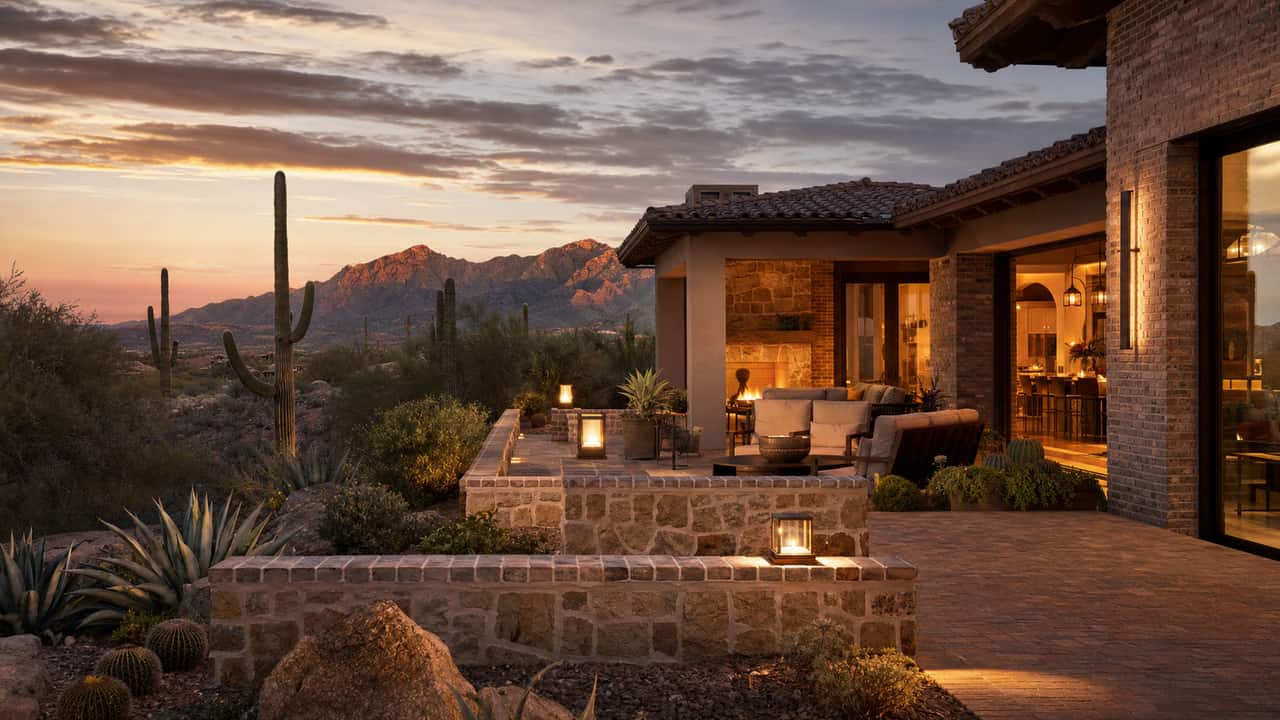
Ready to Build Something Lasting?
Tell us about brickwork, pavers, foundations, fireplaces, chimneys, stucco, or masonry repairs in Tucson.