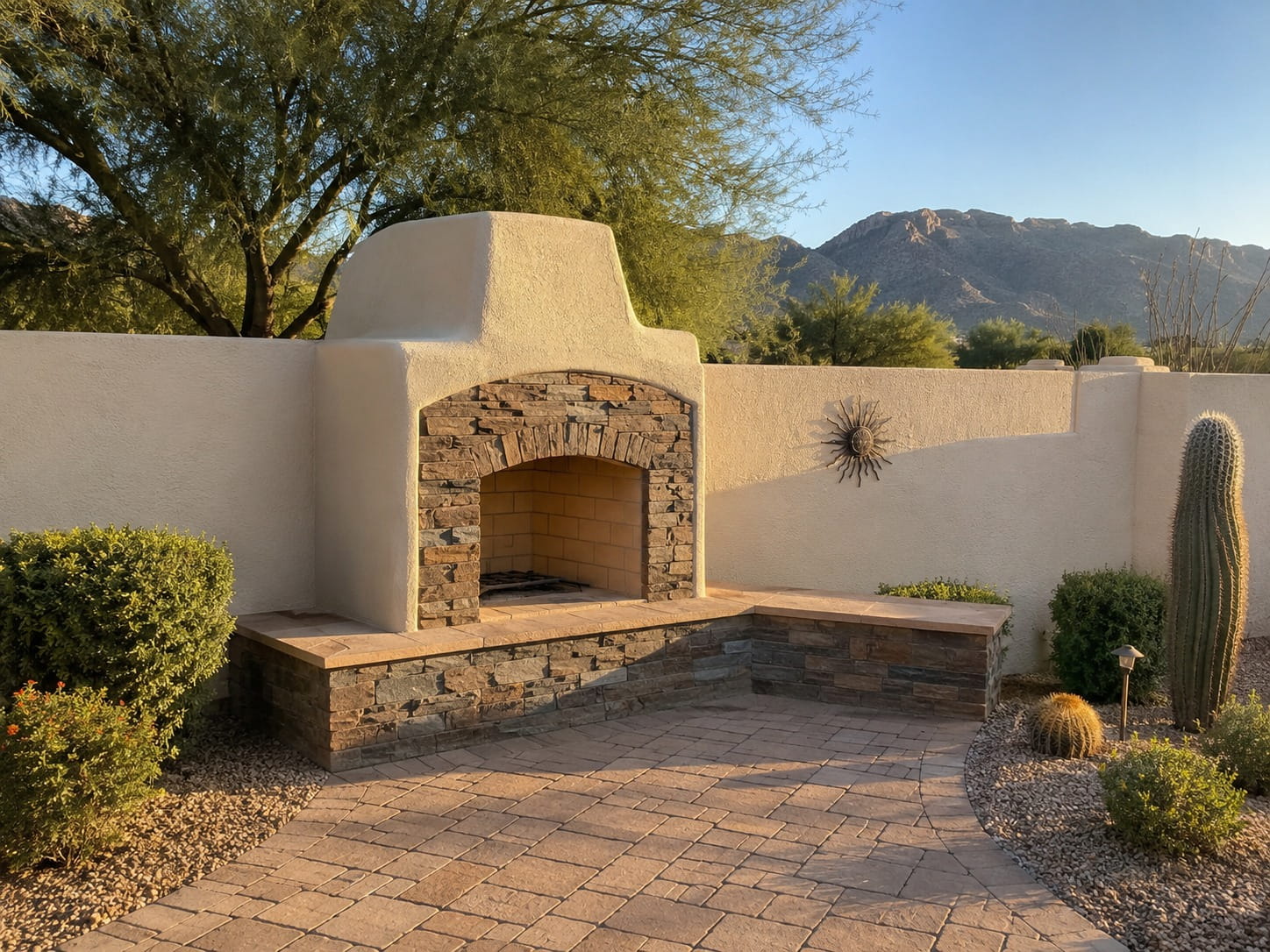
A look at the outdoor fireplace styles that suit Arizona homes best, and the layout, material, and venting decisions that shape the final result.
Outdoor Fireplace Tucson: Choosing the Best Design for Arizona Homes
Tucson evenings cool off fast, even after a scorching afternoon, which is exactly why an outdoor fireplace Tucson homeowners install tends to get used far more than they initially expect. It extends outdoor living well into the fall and winter months and turns a patio into a genuine gathering space year-round. The tricky part is choosing a design that fits both your yard and the realities of desert construction, which is what we’ll walk through here.
Why Outdoor Fireplaces Make So Much Sense Here
Arizona’s climate is almost custom-built for outdoor living, and the temperature drop after sunset, especially between October and March, makes an outdoor fireplace genuinely functional rather than purely decorative. Unlike fire pits, a properly built fireplace directs heat forward toward seating rather than losing it in every direction, and the vertical structure gives you a natural focal point for patio design. It also does double duty as a windbreak, which matters more than people expect on evenings when Tucson’s dry desert wind picks up.
Beyond function, an outdoor fireplace tends to become the visual anchor of a backyard. Whether you’re working with a small courtyard or a larger desert lot, a well-placed fireplace draws the eye and organizes the rest of your outdoor layout around it.
Compared to an indoor fireplace installation, an outdoor build has more design freedom since you’re not constrained by an existing interior wall or room layout. That freedom is part of what makes the planning stage worth slowing down for; you’re choosing a permanent structure, not rearranging furniture, so getting the style and placement right from the start matters more than it might for an indoor remodel.
Popular Outdoor Fireplace Styles for Arizona Homes
The kiva-style fireplace is the most distinctly Southwestern option: a rounded, adobe-inspired form with soft, sculpted lines and a stucco finish, often finished in earth tones that echo traditional Pueblo architecture. It pairs naturally with desert landscaping and territorial-style homes, and its rounded mass radiates heat evenly once it’s been burning for a while.
Stacked stone fireplaces lean more rustic and work well with homes that already feature natural stone accents. The rough, varied texture reads as substantial and durable, and stone holds up exceptionally well to Tucson’s UV exposure without fading the way some painted finishes can over the years.
Stucco-finished fireplaces with clean, geometric lines suit more contemporary desert homes. A smooth or lightly textured stucco finish, especially in a warm neutral tone, complements modern Southwestern architecture and can be finished with a stone or brick surround around the firebox opening for contrast. If you’re leaning toward this style, our stucco painting service can help make sure the finish coat matches your home’s existing color and holds up to sun exposure over time.
Traditional brick fireplaces remain a solid choice for homes with existing brick accents or a more classic aesthetic. Brick is durable, handles heat well, and offers a warmer, more traditional look than stucco or stone.
Sizing the Fireplace to Your Space
Scale is one of the more common mistakes in outdoor fireplace design. A fireplace that’s too large for a small courtyard overwhelms the space and radiates more heat than is comfortable at close range, while one that’s undersized for a larger patio can look out of place and fail to heat the seating area effectively. As a general guideline, the firebox opening and overall structure should be proportional to how far away your seating will be; larger, more open patios can support a taller, more substantial fireplace, while intimate courtyards usually look and function better with a more modest scale.
Choosing the Right Location and Layout
Placement matters as much as style. Consider prevailing wind direction, since you generally want the fireplace positioned so smoke drifts away from your main seating area rather than into it. Think about sightlines from inside the house too; a fireplace visible from your kitchen or living room windows adds value even when it’s not lit.
Most outdoor fireplaces work best as part of a larger hardscape plan rather than a standalone structure. Pairing your fireplace with a brick pavers patio creates a cohesive, finished look and gives you a durable, heat-resistant surface directly in front of the firebox, where a wood or gas fire pit alone would otherwise sit on bare ground or grass.
Materials That Hold Up to Desert Conditions
Not every finish material ages well under Arizona sun. UV exposure fades some paints and stains within a few years, so it’s worth choosing masonry finishes designed for exterior, high-UV use rather than standard interior-grade products. Stone and brick are effectively maintenance-free once installed. Stucco finishes need a quality exterior coating and occasional refresh, but they offer the widest range of color and texture options if you want a custom look.
Firebox construction matters too. The interior of the firebox needs firebrick or another heat-rated material, not standard brick or block, since ordinary masonry can crack or spall under direct, repeated flame exposure. This is one area where cutting corners shows up quickly.
Chimney and Venting Considerations
Most outdoor fireplace designs include a chimney or flue to direct smoke upward and away from seating areas, which also improves draft and how efficiently the fire burns. Proper chimney installation on an outdoor structure follows many of the same principles as an indoor chimney: correct flue sizing, appropriate height relative to the surrounding structure, and a spark arrestor cap to keep embers contained. Skipping or undersizing this element is one of the more common mistakes we see in DIY or budget outdoor fireplace builds, and it usually results in smoke blowing back toward guests rather than venting properly.
Does an Outdoor Fireplace Actually Add Value?
Beyond the lifestyle benefit, many homeowners also want to know whether the investment pays off if they sell. We’ve covered this in detail in a separate guide on whether an outdoor fireplace increases your home’s value, but the short answer is that a well-built, well-integrated fireplace is one of the more consistently appealing outdoor features to prospective buyers in this market.
Planning Your Project
Start by walking your yard at different times of day to understand sun exposure, wind patterns, and how you naturally use the space. Sketch a rough layout that includes seating, the fireplace, and any paver or landscaping work you’re considering together, since designing these elements as one project tends to produce a more cohesive result than adding pieces separately over time.
If you’re ready to talk through design options for your yard, schedule a consultation with our team. We’ll assess your space, discuss which style and materials make sense for your home, and help you plan a fireplace that holds up to Tucson’s climate for decades.
Ready to Build Something Lasting?
Tell us about brickwork, pavers, foundations, fireplaces, chimneys, stucco, or masonry repairs in Tucson.