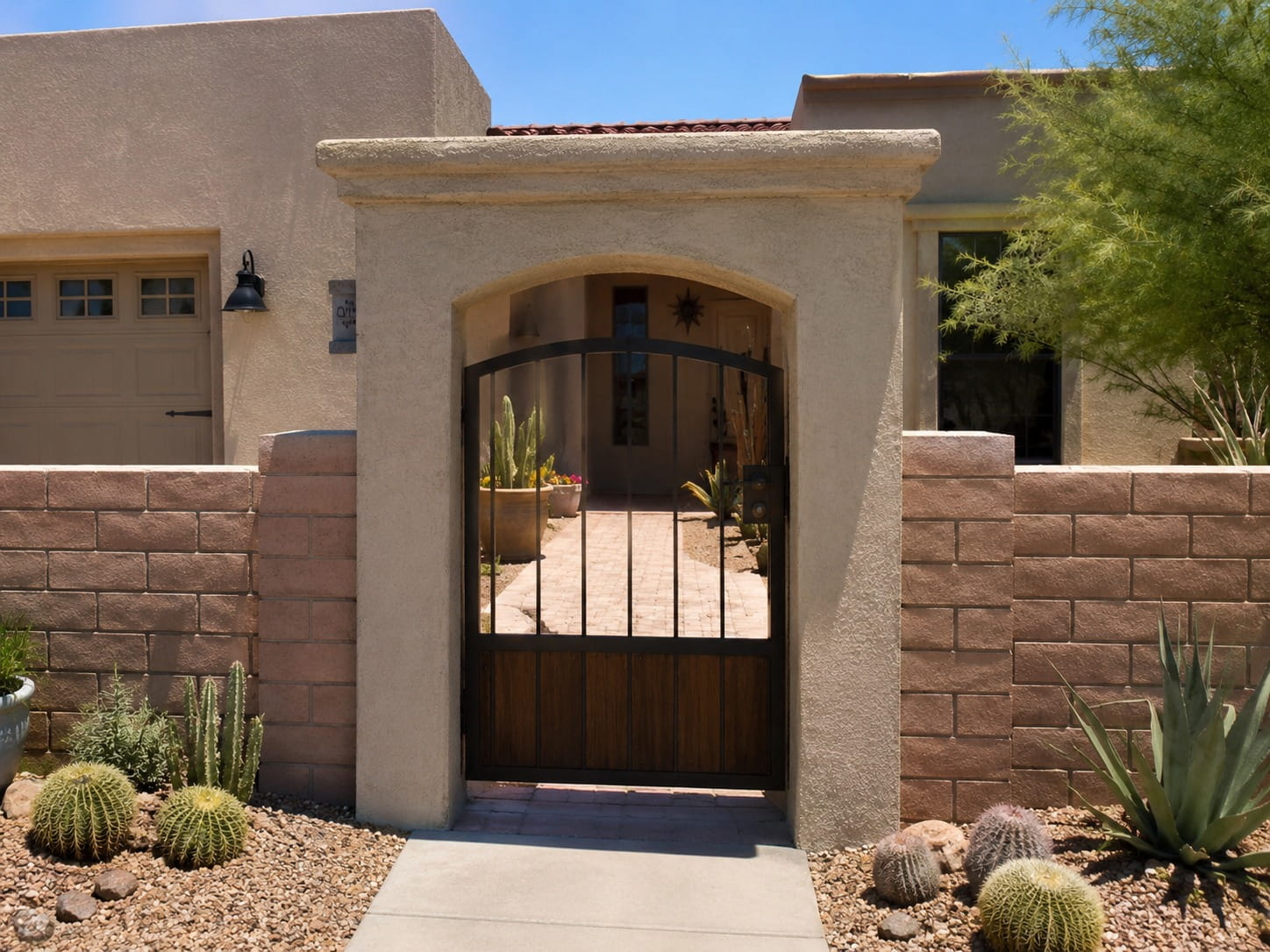
A side-by-side look at brick and stone for Tucson homes, covering durability, maintenance, cost, and which fits different architectural styles best.
Brick Masonry Tucson: Brick vs Stone – Which Is Best for Your Home?
It’s one of the most common decisions homeowners face when planning a new wall, fireplace, or exterior feature: brick or stone? Both are proven materials for brick masonry Tucson projects, and both hold up well in the desert when installed correctly, but they differ enough in cost, maintenance, and appearance that the right choice really depends on your specific project and home style.
Brick vs. Stone: The Basics
Brick is a manufactured, uniform material, fired clay units produced to consistent dimensions, which gives it a clean, regular appearance and makes installation more predictable. Stone, whether natural fieldstone, flagstone, or manufactured stone veneer, offers more visual texture and irregularity, giving structures a heavier, more organic look. Neither is inherently “better”; they simply produce different results and come with different tradeoffs during both installation and the life of the structure.
Durability in Tucson’s Climate
Both materials perform well here when installed with appropriate technique, but they respond to Tucson’s conditions somewhat differently. Brick’s uniformity means its mortar joints are the primary point of long-term wear, since the brick units themselves are quite stable under heat and UV exposure. Natural stone tends to be extremely durable as a material, often outlasting brick in raw longevity, but irregular stone shapes mean more mortar surface area in some applications, which can mean more joints to maintain over time depending on the specific installation style.
Both materials handle Tucson’s intense summer heat and monsoon rainfall well once properly installed, and neither is meaningfully more prone to weather damage than the other when built by an experienced crew using the right mortar mix for the specific material and application.
Maintenance Differences
Maintenance for both materials centers mostly on mortar joint condition rather than the brick or stone units themselves. When joints start to crack or recede on either material, brick repointing techniques apply to both, though stone’s more irregular joint widths sometimes require a bit more skill to match seamlessly. Neither material requires sealing or refinishing on a regular schedule the way some other exterior materials do, which is part of why both remain popular for long-term, low-maintenance construction in this climate.
Cost Comparison
Generally speaking, brick tends to be more budget-friendly than natural stone, largely because manufactured brick units are more consistent and easier to source in bulk, while natural stone often requires more selective sourcing and skilled labor to fit irregular pieces together well. Manufactured stone veneer narrows that gap somewhat, offering a stone appearance at a price point closer to brick, though it’s a different product with its own installation requirements and long-term performance profile compared to full natural stone.
For larger structural applications like block wall repair or new boundary wall construction, brick and block-based construction generally comes in more affordably than an equivalent stone wall, simply due to material and labor efficiency.
Weight, Installation Time, and Labor
Stone is heavier than brick on a per-square-foot basis, which affects both structural planning and installation time. Heavier material means more consideration for footing and support, particularly on taller walls or upper-story applications, and it generally takes longer to install since fitting irregular stone pieces together well requires more hands-on judgment than laying uniform brick courses. This is part of why skilled stonemasons often charge a premium over standard bricklaying rates; the work genuinely takes more time and experience to get right.
Brick’s consistency cuts the other way: faster installation, more predictable labor hours, and less variability in the finished result from one mason to the next, assuming both are skilled. Neither of these is a reason to avoid stone if it’s the look you want, but it’s worth factoring into your timeline expectations if you’re working with a project deadline.
Aesthetic and Architectural Fit
This is often the deciding factor more than cost or durability. Brick suits traditional, Southwestern territorial, and more classically styled homes particularly well, offering a clean, warm appearance that pairs naturally with stucco and tile roofing common throughout Tucson. Stone tends to suit homes with a more rustic, mountain, or contemporary desert aesthetic, and it’s frequently used as an accent material, on a fireplace face or entry feature, even on homes that use brick or block for the bulk of their structural masonry.
Many of the most successful projects we’ve built actually combine both: brick or block for structural walls and foundational elements, with stone used selectively as an accent on fireplaces, entryways, or feature walls where its texture and visual weight make the biggest impact.
Color and texture consistency with your existing home matter as much as the material itself. A stone accent that clashes with your home’s existing brick or stucco tone can look disjointed no matter how well it’s installed, while a well-matched material, even a different one than what’s already on the house, can read as an intentional design choice rather than a mismatched addition. Bringing a sample or photo of your home’s existing exterior to any material selection conversation helps avoid this mismatch before it becomes a permanent part of your property.
Structural Considerations
For structural applications like foundation work, block and brick generally offer more predictable engineering characteristics due to their uniform dimensions, which is one reason foundation installation projects lean heavily on brick and block construction rather than stone. Stone can absolutely be used structurally, and has been for centuries, but it typically requires more specialized skill to engineer correctly for load-bearing applications compared to standardized brick or block units.
Which Should You Choose?
If you’re prioritizing budget, faster installation, and a clean, classic look that suits most Tucson architectural styles, brick is usually the more practical choice. If you’re drawn to a heavier, more textured, rustic aesthetic and have some flexibility in your budget, stone, or a combination of both materials, may serve your project better. Neither choice is a mistake as long as it’s installed well and suits your home’s overall style.
If your existing brickwork is already showing wear, it’s worth reading our guide on the warning signs your brickwork needs professional repair before deciding whether you’re comparing materials for a repair project or a fresh build. And whichever material you’re leaning toward, understanding how to choose the best brick masonry contractor in Tucson will help you find a team that can execute either option well.
If you’d like a professional opinion on which material fits your specific project, contact us and we’ll walk you through the tradeoffs in person, based on your home, your budget, and the look you’re going for.
Ready to Build Something Lasting?
Tell us about brickwork, pavers, foundations, fireplaces, chimneys, stucco, or masonry repairs in Tucson.