Concrete Retaining Wall Contractors In Tucson
A retaining wall is holding back soil, and soil gets much heavier when it is wet. Most failed walls in the Tucson area did not fail because the concrete was weak; they failed because water built up behind them during monsoon season with nowhere to go, and the hydrostatic pressure pushed the wall over.
That is why drainage is the first thing we design, not the last. Our Tucson wall and concrete contractors build in drain rock, filter fabric, and weep holes or a perforated drain line as standard, so water behind the wall has a route out instead of accumulating against the back face.
We build poured reinforced walls and reinforced block walls, sized to the retained height and the soil behind them. Footings are excavated and poured to bear properly, vertical steel is tied into the footing rather than set in afterward, and the cells or forms are filled solid where the design calls for it.
Terracing, steps, seat wall caps, and integrated planters can all be worked into the design, and we will be direct with you about when a wall height needs engineering rather than a standard detail.
Tell us about the site
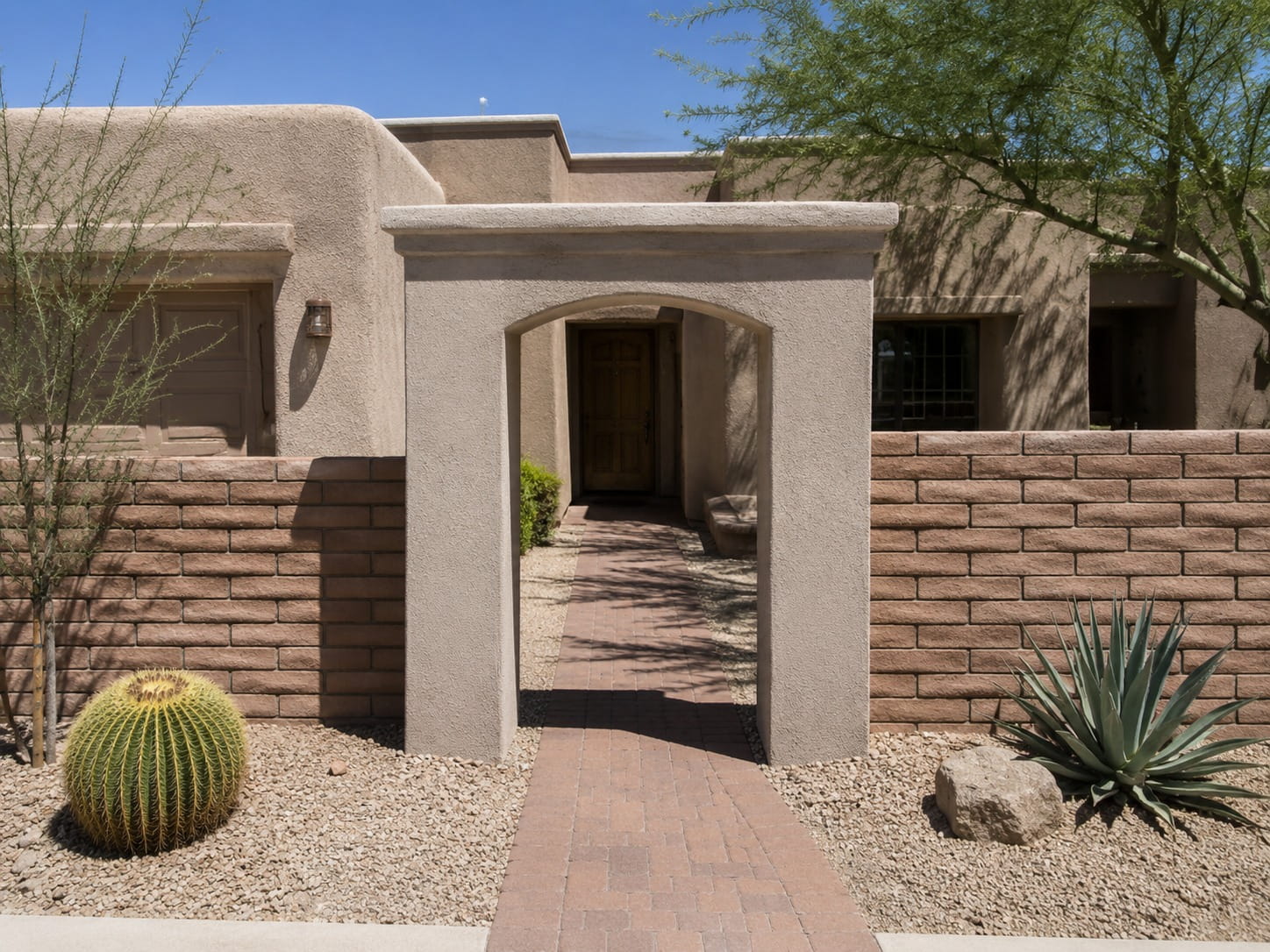
Why Retaining Walls Fail Without Drainage
Retaining walls almost always fail from water pressure rather than weak concrete, so drainage is designed first and never treated as an optional extra.
Above a certain retained height a wall needs engineering, not a standard detail. We will tell you when you are in that territory.
Drainage Designed In
Drain rock, filter fabric, and weeps or drain line built in so water does not load the wall.
Steel Tied To Footing
Vertical reinforcement anchored into the footing pour rather than added afterward.
Height-Appropriate Design
Wall thickness, footing size, and reinforcement sized to the retained height and soil.
Integrated Features
Terracing, steps, caps, and planters worked into the wall rather than added on later.
Concrete Retaining Walls: How We Work
Three clear steps keep the site organized, the scope understandable, and the finished masonry durable.
Assess Grade And Soil
We measure the retained height, review the slope and soil, and confirm whether the design needs engineering.
Footing And Steel
The footing is excavated and poured with vertical steel set to project into the wall above.
Wall, Drainage, Backfill
The wall is built and reinforced, drainage is installed behind it, then backfill is placed and compacted in lifts.
Concrete Retaining Walls Built For Tucson Conditions
Tucson masonry has to handle heat, dry air, monsoon moisture, and soil movement. We plan each detail so the finished work is attractive, stable, and practical for Arizona conditions.
The goal is a clean scope before construction starts: the right material, the right repair method, and a clear explanation of how the work will hold up over time.
- Climate-ready materials selected for Tucson heat and monsoon exposure
- Clear estimates before masonry, foundation, or stucco work begins
- Residential and commercial sites handled with tidy staging
- Finished work reviewed for strength, appearance, and durability
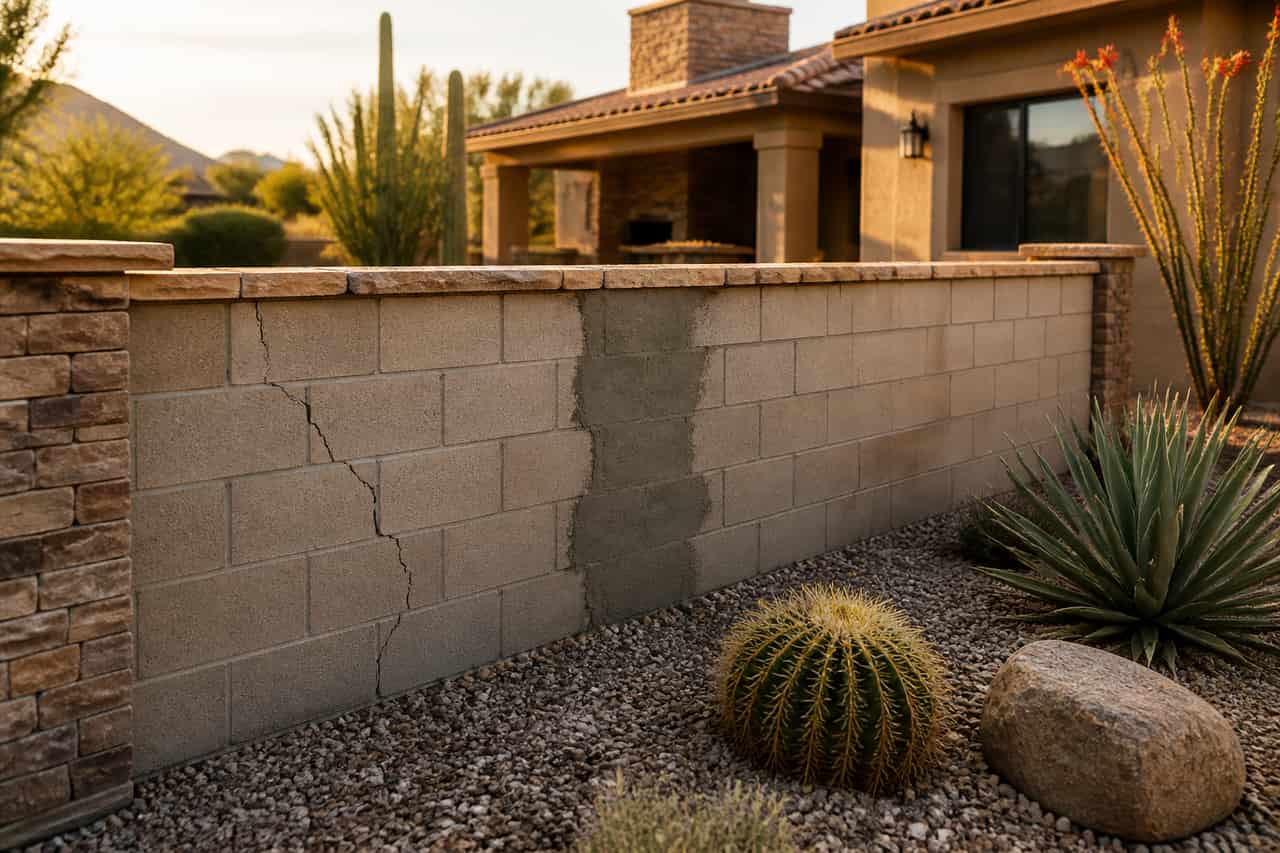
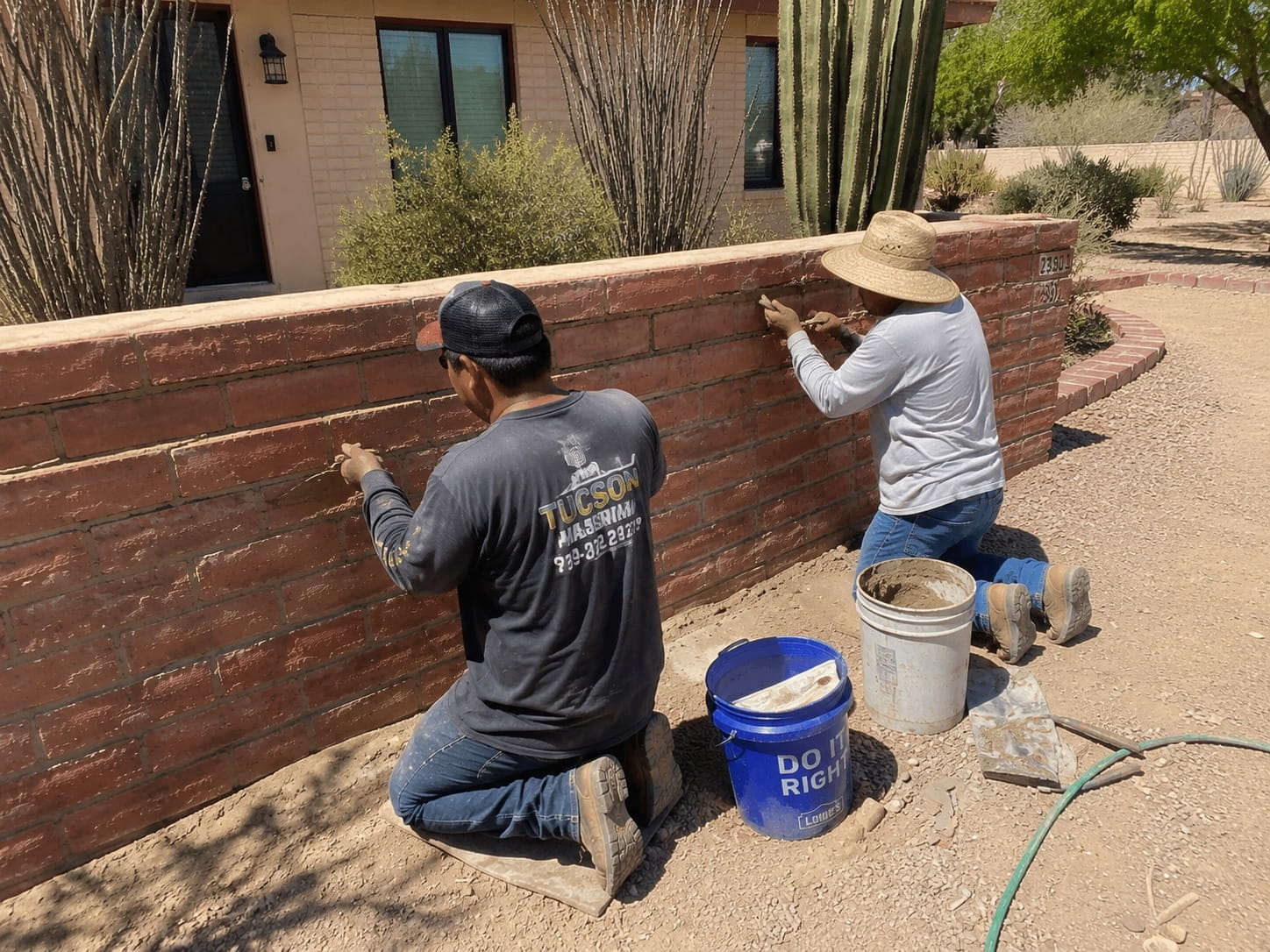
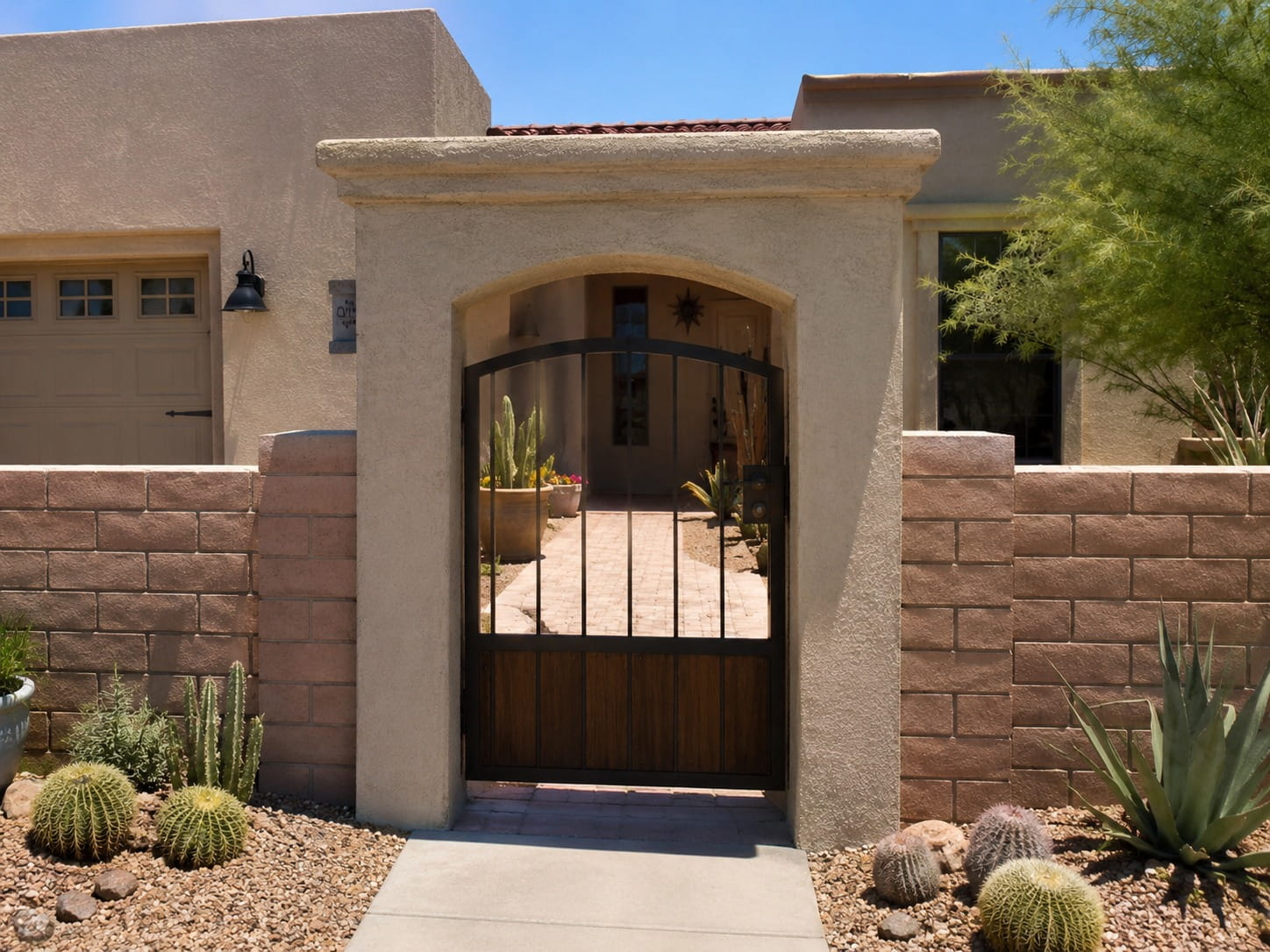
Concrete Retaining Walls Tucson: Project Gallery
Visual examples of the material, finish, and site conditions that shape Tucson masonry work.
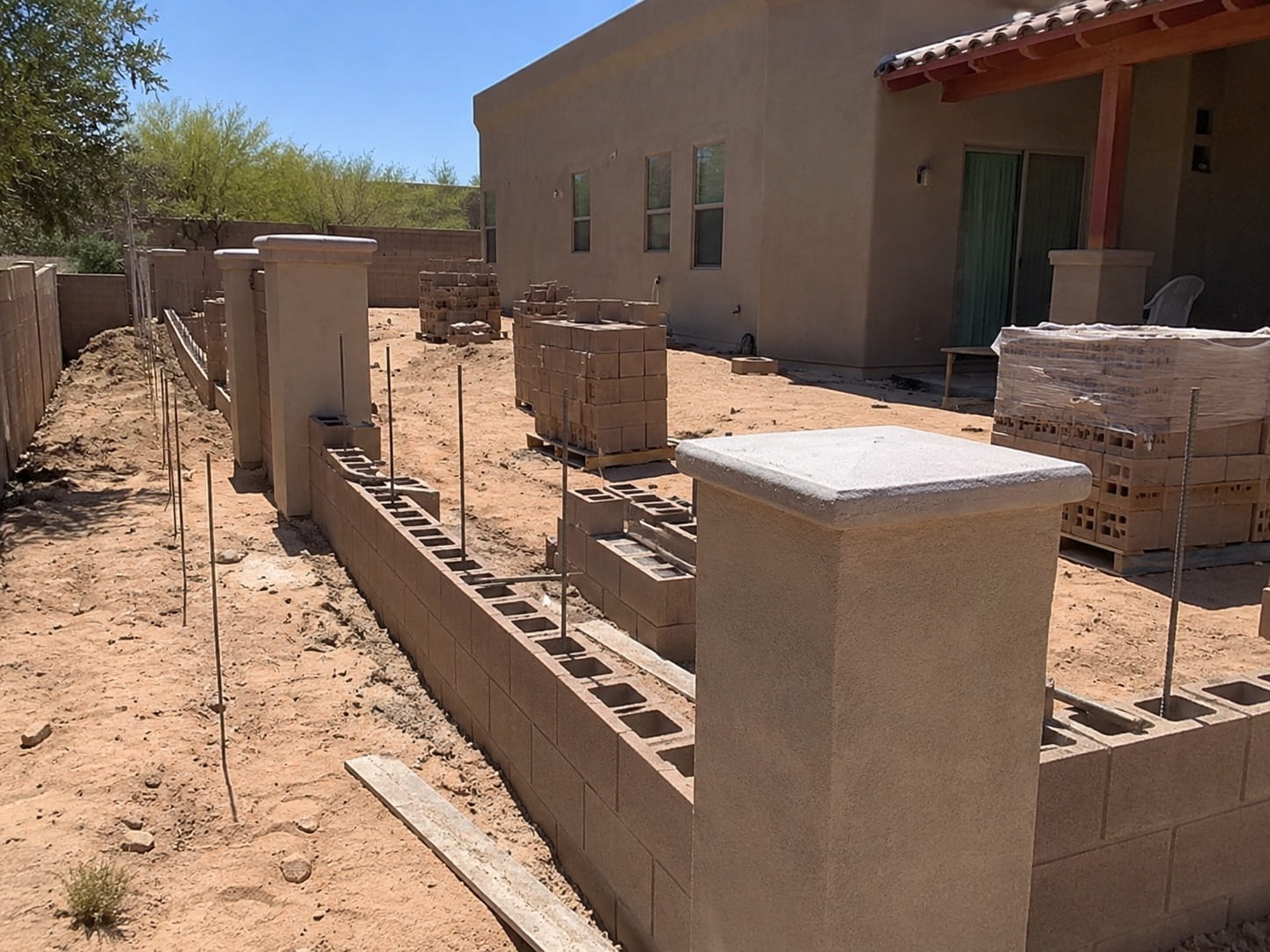
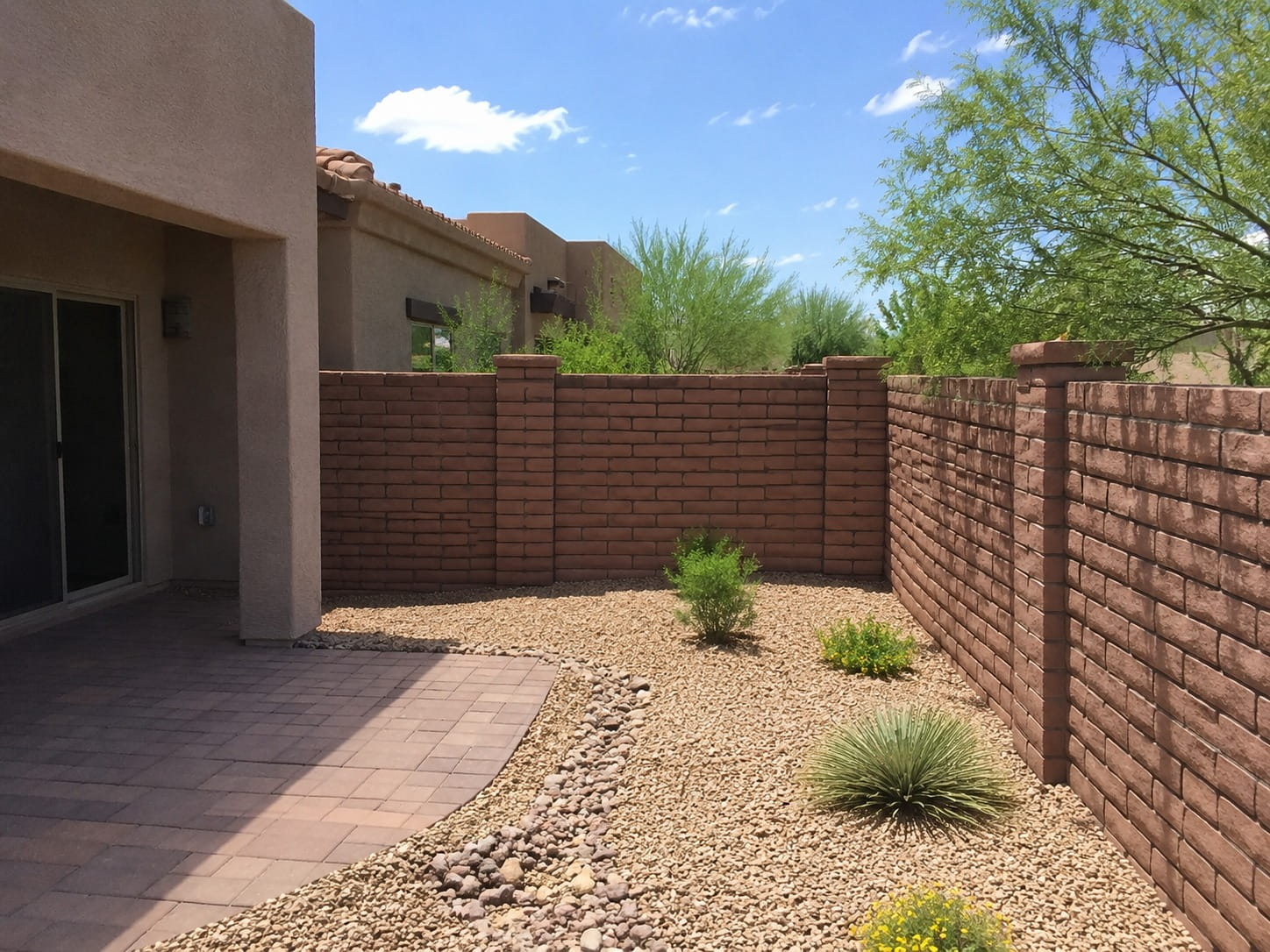
Get a Free Concrete Retaining Walls Estimate
Photos, site address, access, visible damage, preferred finish, and timeline help us respond with a clearer scope.
Tell us about the site
Clear Answers Before Work Starts
Practical answers for timing, matching, process, cost, and long-term performance.
How tall can a retaining wall be before it needs engineering?
Thresholds vary by jurisdiction, but once you are retaining more than a few feet, engineered design is normally required. We will tell you where your wall sits and what it needs.
Why do retaining walls lean or bulge?
Nearly always water pressure behind the wall combined with inadequate drainage, sometimes compounded by undersized footings or missing reinforcement.
Do retaining walls need weep holes?
They need a drainage route of some kind. Weep holes are one method, a perforated drain line in drain rock is another, and many walls use both.
Can you repair my existing leaning wall?
Sometimes, depending on how far it has moved and why. A wall that has rotated significantly usually needs rebuilding, because the underlying cause is still there.
Poured concrete or block for a retaining wall?
Both work when built correctly. Poured walls suit taller retained heights and continuous runs; reinforced block is often more economical and offers more finish options.
Plan Concrete Retaining Walls Tucson With A Local Tucson Mason
Send the site address, project notes, photos if available, and your timeline. We will help you understand the right next step before work begins.